
Anyone who has walked past a construction site, a storage facility or a railway line will recognise the sight of high-visibility clothing. Bright colours and reflective strips have become so prevalent in the working landscape that one might easily assume all hi-vis garments are fundamentally alike. In reality, there exists a notable distinction between the high-visibility clothing typically worn on construction sites and the specialised railway attire utilised by individuals working on or near the tracks. Recognising these distinctions is crucial not just for compliance, but, more significantly, for the safety of those who wear it.
Understanding the purpose of Hi-Vis clothing is essential. It serves as a crucial safety measure, ensuring visibility in various environments, particularly those with potential hazards. The bright colours and reflective materials are designed to make individuals easily noticeable, reducing the risk of accidents and enhancing overall safety. This necessity for visibility is why Hi-Vis exists in the first place.
The purpose of any high-visibility garment is straightforward: to ensure that the wearer is easily distinguishable from their environment, allowing vehicle operators, plant machinery drivers, or, in the case of railway clothing, train drivers, to see them promptly. However, the environments in which hi-vis clothing is utilised differ greatly, and the risks linked to each environment are quite distinct. A worker on a tranquil industrial estate encounters a distinctly different array of hazards compared to an individual positioned trackside as a train speeds toward them at 125 miles per hour. This is the primary reason why railway clothing has developed into its own unique category, distinct from standard workwear.
The issue of speed and stopping distance
One of the most evident reasons railway clothing differs from standard hi-vis is the matter of stopping distances. A car or van can usually halt within a few metres, providing a driver with a fair opportunity to respond to a pedestrian in unexpected hi-vis clothing. A train, in contrast, can require more than a kilometre to come to a full stop, especially at mainline speeds. This indicates that a train driver must be capable of recognising an individual on or near the tracks from a significantly greater distance than what is necessary for a car driver. Railway clothing is crafted with an emphasis on extended detection distance, utilising specific colours, patterns, and reflective properties that have been shown to be visible from significantly greater distances, across a broader spectrum of lighting and weather conditions.
Colour and Design Standards
Generic hi-vis clothing intended for general industry use is primarily manufactured in fluorescent yellow, although orange and, to a lesser extent, red variants are also available. These garments are typically crafted to adhere to a general workwear standard, which encompasses background colour, the extent of fluorescent material, and the positioning of retroreflective tape. Railway clothing is subject to additional and more specific requirements established by the rail industry itself, in addition to the general workwear standards. In the UK, this has traditionally involved the production of railway clothing according to standards specifically established for the rail sector, alongside the broader British and European standards that pertain to hi-vis garments in general.
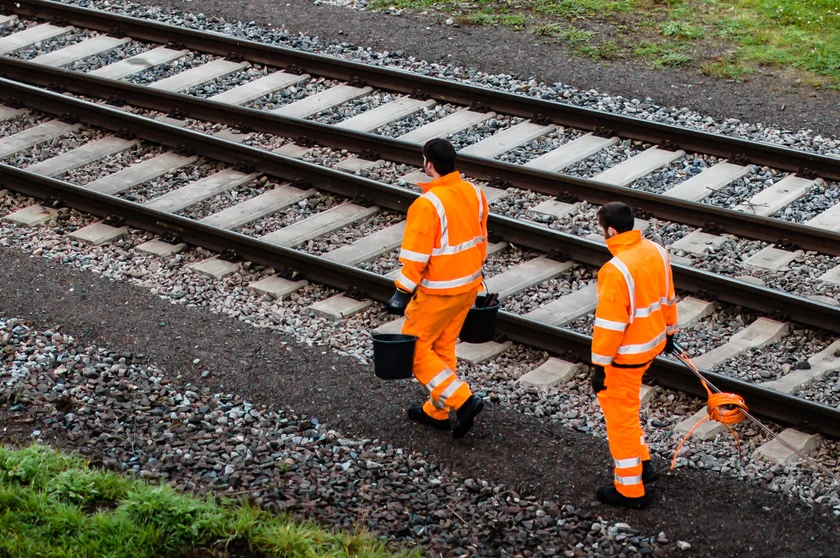
This is the reason railway clothing frequently features a distinctive orange hue instead of the yellow that is more commonly observed on construction sites. The orange utilised in railway clothing has been chosen for its effectiveness against the distinct backdrops present in a rail environment, including ballast, steel rails, vegetation, and the grey hues of standard infrastructure. Generic hi-vis is typically designed to be effective against the types of backgrounds commonly encountered on roads and general construction sites, which may not always align.
Retroreflective tape enhances visibility during nighttime conditions.
Retroreflective tape is a crucial element of any high-visibility garment, as it enables the wearer to be seen in low-light conditions when illuminated by headlights or other light sources. On generic hi-vis clothing, the tape is typically arranged in straightforward horizontal bands around the torso and arms. Railway clothing often features a more structured pattern of tape, which may include extra bands across the shoulders or an X-shape across the back and chest. This is due to the fact that a train driver’s sightline, viewing angle, and lighting conditions differ significantly from those of a car or lorry driver. The tape layout in railway clothing is specifically designed to enhance visibility from the angles a train driver would experience when approaching someone on or near the line.
Durability and Environmental Requirements
The working environment for individuals in railway clothing is frequently much more challenging than that encountered by those in general industry. Trackside workers face hazards such as sharp ballast, oily and greasy surfaces and overhead line equipment. They also endure prolonged exposure to various weather conditions, often working extended shifts during the night. Consequently, railway clothing is often produced using more durable and abrasion-resistant fabrics compared to standard generic hi-vis options. Seams, pockets, and fastenings are frequently reinforced, and the overall construction is designed to endure repeated exposure to dirt, oil, and rough handling without the reflective properties or fluorescent colour degrading rapidly.
Generic hi-vis clothing, although required to adhere to specific durability standards, is not inherently designed with the unique conditions of the trackside environment in consideration. A hi-vis vest designed for a warehouse or a car park does not require the same level of abrasion or contamination resistance as railway clothing. Consequently, manufacturers of general workwear may not always consider those specific stresses in their designs.
Integration with Additional Protective Gear
Another notable aspect of railway clothing is its design, which complements other types of personal protective equipment typically needed in a rail environment. Numerous trackside positions necessitate that employees don flame-resistant attire, arc-protective garments, or clothing specifically crafted to minimise the risk of static discharge in proximity to electrified equipment. Railway clothing is frequently manufactured with these extra protective features integrated, rather than considering flame resistance or arc protection as an optional addition. In contrast, generic hi-vis clothing is typically manufactured as a separate visibility garment, with any extra protective features being more of an exception than the standard.
Compliance and Procurement
Due to the unique dangers associated with trackside work, the acquisition of railway clothing is usually regulated by more comprehensive specifications than those for standard hi-vis workwear. Employers and contractors operating in the rail industry typically need to obtain clothing that has been evaluated based on rail-specific standards, rather than depending only on general hi-vis criteria. This indicates that railway clothing is not merely a more stringent form of generic hi-vis; rather, it constitutes a distinct category of garment, created to address a specific set of risks.
For workers transitioning between industries, this distinction is important to consider. A hi-vis jacket that is suitable for a construction site may not be appropriate, or even allowed, for use on or near a railway line. Similarly, railway clothing, although outstanding for its designated function, might be overly specialised and more expensive for general industrial applications where the particular rail hazards are not present.
A Question of Suitability
Ultimately, the distinction between rail and generic hi-vis clothing hinges on the suitability for their intended use. Both categories aim to ensure the wearer’s visibility and safety; however, the unique environments, speeds, and hazards associated with rail work necessitate a more tailored approach. Railway clothing has been influenced by years of experience in a particularly challenging environment, with its colours, reflective patterns, fabric selections, and extra protective elements all embodying insights gained from that context. Generic hi-vis clothing continues to effectively fulfil its intended purpose across a wide variety of settings.
For those tasked with selecting protective clothing, whether for personal use or for a larger team, grasping this distinction is crucial. Choosing railway clothing where it is required, rather than treating it as interchangeable with generic hi-vis, is not merely a procedural formality. It is essential to ensure that the clothing worn truly corresponds to the risks present in the environment where it will be utilised.