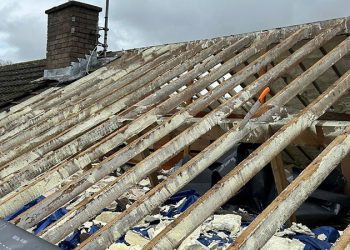


Spray foam insulation was originally hailed as a rapid and effective technique to increase energy efficiency, especially in older houses with difficult-to-treat roof spaces. But in recent years, property owners have increasingly found themselves at a crossroads over whether to maintain this material or remove it. The phrase spray foam insulation removal has becoming more and more common in conversations between surveyors, lenders, insurers and home owners around the UK.
This is not a change to take lightly. Structural concerns, damp problems, mortgage and equity release limits, insurance hassles and resale issues have all combined to make many households decide that removal is the least risky alternative in the long term. In this post, we will go over the most prevalent reasons for spray foam insulation removal and why it is generally considered a necessity rather than an option.
Wood rot and moisture retention
The possibility of retained moisture causing wood rot is one of the most often mentioned reasons for spray foam insulation removal. In the typical UK roof, the chilly loft depends on the ventilation between the soffit and the ridge to allow the warm wet air from the occupied space to leave without condensing on the cold timbers. If spray foam is sprayed directly to the bottom of the roof tiles or between the rafters it might block this airflow and produce an unventilated environment.
With time, warm humid air from below can condense on the chilly side of the foam or of any openings around it. This condensation builds up in the roof structure and is absorbed by the rafters, purlins and battens. Where there is persistent wetness, wood rotting fungi and mould can flourish, weakening structural timbers and compromising the integrity of the roof. More homeowners and surveyors are finding rot after spray foam has been in place for a number of years and serious harm has been done.
The foam sticks to the woodwork and can hide early evidence of problems such as stains, damp areas or softening wood. Decay may be advanced by the time problems become obvious from within the loft. Spray foam insulation removal becomes the only option for many owners to expose the timbers, determine the extent of any damage, and allow the roof to breathe again. If they are not removed there is a risk of further degradation resulting to even more costly structural repairs in the future.
Not surveying and inspecting the roof
The difficulties it presents for appropriate inspection and surveying is a second key factor in spray foam insulation removal. On inspection, a chartered surveyor or structural engineer will want to see the condition of the roof structure, including the timbers, fixings, membranes and any signs of movement, insect attack or water infiltration. Thick coating of spray foam covers the rafters and bottom of tiles, making damaging inspection impossible.
That’s why many lenders and equity release providers now see spray foam in the roof as a red sign – as it stymies a clear evaluation of risk. Surveyors often indicate that the roof construction cannot be properly evaluated due to the presence of foam, resulting to qualifications or a flat refusal of a mortgage or refinancing application. For homeowners who want to sell, refinance or release equity, it might be a deal-breaker. Spray foam insulation removal provides visibility so surveyors can check the roof is sound and satisfy lender criteria.
If a lender does not automatically refuse an application, the doubt cast by hidden timbers might prolong the process, ramp up survey costs or mean the buyer has to commission invasive examinations. In a competitive property market, properties with spray foam may be less desirable simply because they bring more risk and complication. Tear out the foam and you tear out this barrier making the property easy to evaluate, finance and transact.
Mortgages, remortgages and equity release limits
Also closely related to survey constraints is the direct effect of spray foam on mortgage and equity release choices. Many UK lenders now refuse or restrict mortgages on homes where spray foam insulation has been applied to the roof structure – notably closed-cell foam bonded to timbers and tiles. The worry is not only about possible concealed damage, but also how difficult and expensive it might be to fix things if problems are found later.
Many homeowners who put spray foam years ago – usually in good faith to improve energy efficiency – are now unable to remortgage at competitive rates or move to a new property without first fixing the issue. Equity release providers are also reluctant to approve applications if spray foam is present as they are generally quite risk adverse. This could be a major limitation for senior owners who intend to draw on property wealth in retirement.
In many circumstances, lenders will require the complete removal of the spray foam and restoration of the roof to a typical, inspectable condition as a condition of approval. For anyone who wants to borrow against their property, this need elevates spray foam insulation removal from a theoretical possibility to a practical obligation. Removal is expensive but it is also often preferable to being locked into a mortgage or unable to move or access funds.
Insurance issues and higher costs
Another industry where spray foam might cause issues that result in spray foam insulation removal is insurance. Some house insurers are suspicious of homes with spray foam in the roof due to the possibility of hidden moisture damage, structural degradation and the difficulty of performing repairs. In certain circumstances insurers may refuse to give any protection, in others they may charge higher premiums or specific exclusions relating to the roof and any damage coming from it.
The inability for homeowners to get normal buildings insurance, or at a significantly higher price, is a powerful incentive to get rid of the foam. Insurance troubles can complicate problems with a mortgage because lenders generally require proper buildings insurance as a condition of a mortgage. Insurers are more comfortable insuring a traditional roof that can be inspected and repaired without the need for an expert, thus owners can frequently return to normal insurability by undertaking spray foam insulation removal.
The insurance issue is also an issue for potential buyers. Even if a seller can locate a suitable buyer, the buyer may find cover difficult to get on reasonable terms. This can lead to late-stage sales falling through, adding to the financial and emotional burden of having spray foam in the first place. The removal is a plus for the current owner and the prospective purchasers, making it easier to get insurance and finance.
Issues of resale and lower marketability
The net impact of survey limits, mortgage constraints and insurance concerns is a significant loss in marketability for buildings using spray foam insulation. Estate agents and sellers say some purchasers are now avoiding homes where spray foam has been used in the loft for fear of potential financial, insurance or structural concerns. This can result in longer time to market, lesser offers or deals falling through following a study.
In a routine sale a buyer’s survey could point out small problems which are discussed or accepted. In the presence of spray foam, the survey can instead raise basic questions regarding the state of the roof and the property’s eligibility for mortgage funding. Many buyers, especially those reliant on a mortgage, just walk away rather than deal with the uncertainty and probable expense of spray foam insulation removal themselves.
The choice for sellers is frequently obvious: either accept a lower price that represents the perceived danger and expected removal expense, or perform spray foam insulation removal before marketing the property. In actuality, many people find that taking the foam out ahead of time makes the home simpler to sell, widens the buyer pool and avoids last-minute renegotiations. The cost of removal is short term but the risk of a stalled or failed sale is longer term.
Installation faults and performance issues Long term maintenance
Spray foam jobs do not always fail but many decisions to remove are based on bad craftsmanship or improper application. Problems such as using the wrong density of foam, incorrect surface preparation, application in unsuitable weather conditions or using incompatible materials can cause shrinkage, cracking, delamination and loss of adhesion. Such flaws can cause openings that let air and moisture seep in, reducing the thermal performance and lifespan of the roof.
Where foam has shrunk or pulled away from timbers and tiles, thermal bridging and drafts might emerge, undoing the initial energy-saving intent. Poorly fitted foam can lead to ponding water, coating failure and biological growth on flat or low-slope roofs. UV exposure can degrade the foam, foot traffic can cause mechanical damage, and coating failures can occur multiple times, all of which can diminish performance and increase maintenance costs over time.
For homes with recurring leaks, odours, evident deterioration or escalating energy bills despite spray foam, removal may be the most reasonable response. Spray foam insulation removal enables a return to traditional insulation technologies that are simpler to examine, maintain, and replace rather than constantly patching a failing system. This is especially true when it is not possible to guarantee the restoration of the original installation or the expense of further maintenance does not justify the advantages.
Health, safety and renovation constraints
Health and safety factors are also included in some spray foam insulation removal decisions, although are less often cited than economical and structural concerns. Some residents have been concerned about interior air quality due to off-gassing during and after installation especially if the wrong catalysts or blowing agents were utilised. The proof varies from case to case but the perceived risk is sufficient for some homes to demand removal, especially where odours or discomfort are recorded.
Spray foam can also make future renovations and repairs more difficult. The permanent bind it makes to tiles, battens and timbers makes it very much harder and more expensive to replace individual roof elements. Large areas of foam may have to be cut out to allow for storm damage, tile repair or modifications to services in the roof space which will increase disturbance and cost. Spray foam insulation removal may be done proactively to ease the project for owners planning additions, loft conversions, or substantial roof renovations.
Finally, the removal process itself can also be risky for structural elements, electrical systems and plumbing if not done with the right skills. This has prompted many homeowners to believe that professional spray foam insulation removal is the safest way, even if it involves a big expense. The idea is to eliminate the initial hazards that the foam creates and the subsequent hazards that can occur when you have to operate around it.
Abstract
The increase in UK homes seeking spray foam insulation removal is not down to a single issue but a combination of factors. Trapping of moisture and rotting of timber, inability to inspect roof structures, mortgage and equity release restrictions, insurance complications, resale difficulties, installation defects and renovation constraints all contribute to a growing consensus that spray foam creates more problems than it solves. For many homes, spray foam insulation removal is no longer a fringe issue but a practical reaction to valid financial, structural and market realities.